
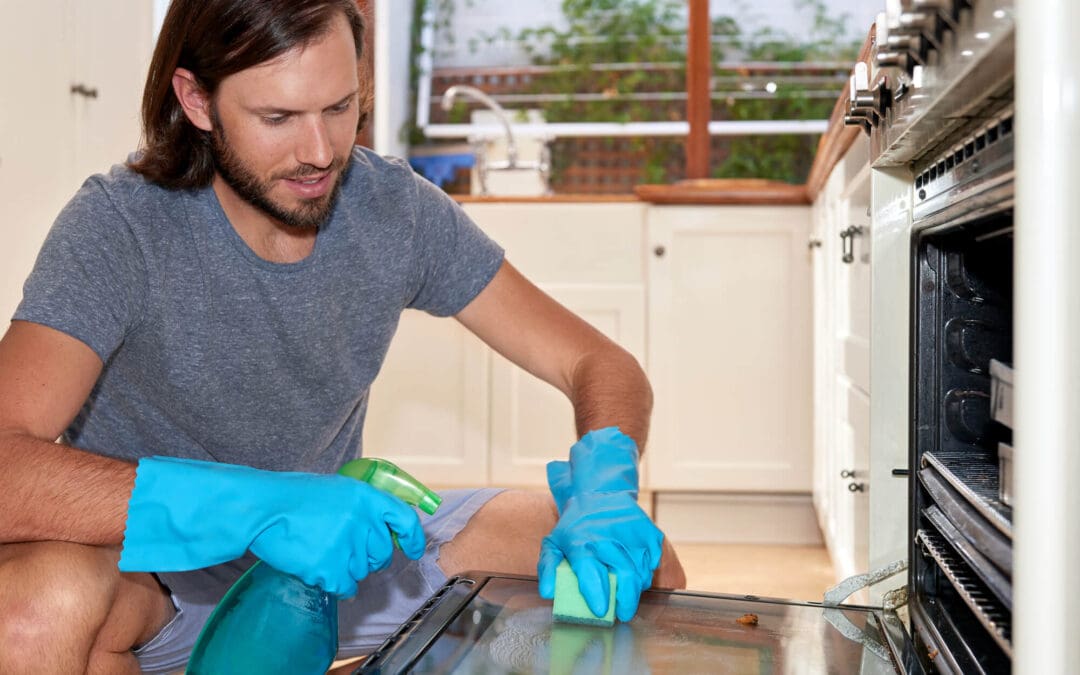
Knowing how to clean an oven properly will make a noticeable difference in both kitchen hygiene and cooking performance. Over time, grease, food spills, and baked-on residue accumulate inside the oven, leading to smoke, unpleasant odors, and uneven heating. Taking the time to clean an oven regularly helps maintain its efficiency, improves the flavor of food, and keeps the kitchen feeling fresh and well-maintained.
Why It’s Important to Clean an Oven Regularly
An oven that is not cleaned routinely can become more than just an eyesore. Built-up grease and food debris can burn during cooking, producing smoke that affects indoor air quality and triggers smoke detectors. In extreme cases, heavy buildup can even pose a fire risk. From a performance standpoint, residue inside the oven may interfere with heat distribution. When homeowners clean an oven consistently, the appliance is better able to maintain accurate temperatures, resulting in more reliable cooking and baking outcomes. Regular cleaning also helps extend the oven’s life by reducing strain on its internal components.
Preparing to Clean an Oven Safely
Before beginning any cleaning process, the oven should be completely cool. Removing oven racks allows for full access to interior surfaces, making the job easier. Many homeowners choose between commercial oven cleaners and natural alternatives, depending on personal preference and sensitivity to strong chemicals. Ventilation is important during this process. Opening windows or turning on a kitchen exhaust fan will help manage odors, especially when using store-bought cleaners. Wearing gloves is also recommended to protect skin from harsh residues and cleaning agents.
How to Clean Using Natural Methods
For homeowners who prefer a gentler approach, natural cleaning solutions can be highly effective. A mixture of baking soda and water creates a thick paste that adheres well to greasy surfaces. Spread the paste across the oven interior, avoiding heating elements, and left to sit for several hours or overnight. As the baking soda breaks down grime, wiping it away with a damp cloth becomes much easier. A light spray of vinegar will help dissolve any remaining residue and leave surfaces clean and deodorized. This method allows homeowners to clean an oven thoroughly without introducing harsh fumes into the home.
When to Clean an Oven with Built-In Features
Many modern ovens feature a self-cleaning function that burns off residue at extremely high temperatures. While convenient, this feature should be used carefully. The process generates significant heat and odor, and it may not be suitable for older appliances or homes with pets and small children. If using the self-cleaning cycle, it is important to follow the manufacturer’s instructions and remove racks beforehand. After the cycle completes and the oven cools, wiping out remaining ash ensures a clean finish.
Keeping Your Oven Cleaner Longer
Once an oven has been thoroughly cleaned, small habits will help maintain it. Promptly wiping spills after cooking prevents buildup from hardening over time. Using oven-safe liners or covered cookware will also reduce mess and make future cleanings less intensive. When homeowners clean an oven on a regular schedule, the task becomes faster and more manageable. A well-maintained oven not only looks better but also supports safer cooking, better performance, and a more enjoyable kitchen environment overall.
Liberty Inspections offers home inspections in the Greater Phoenix area. Contact us to schedule an appointment today.
Recent Comments